

Discectomy Surgery
A damaged or herniated spinal disc can send sharp, radiating pain down the legs, making standing or sitting unbearable. When the damage compresses spinal nerves, it can cause weakness or numbness in your hip, thigh, leg, or foot. When these symptoms resist conservative care, a discectomy can alleviate pain and restore function and mobility.
Hoag Orthopedic Institute's fellowship trained orthopedic spine surgeons are specially trained in performing discectomy surgery in addition to the most complex and minimally invasive cases.
What Is a Discectomy?
Discectomy is a type of spine surgery that involves the removal of all or part of a spinal disc that compresses a nerve root or the spinal cord, causing pain and reduced mobility.
Discectomy surgery can be performed on the lower back, mid-back, or even the neck. A lumbar discectomy focuses on the lower spine and is most commonly used to treat slipped or herniated discs in the mid to low back, while a cervical discectomy treats similar disc herniation in the neck.
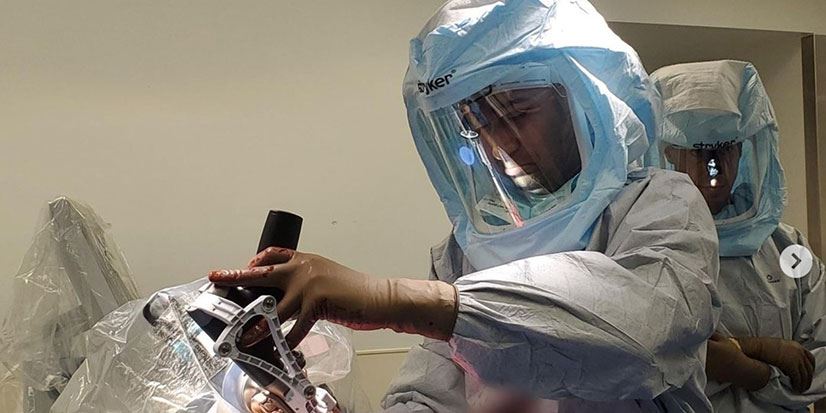
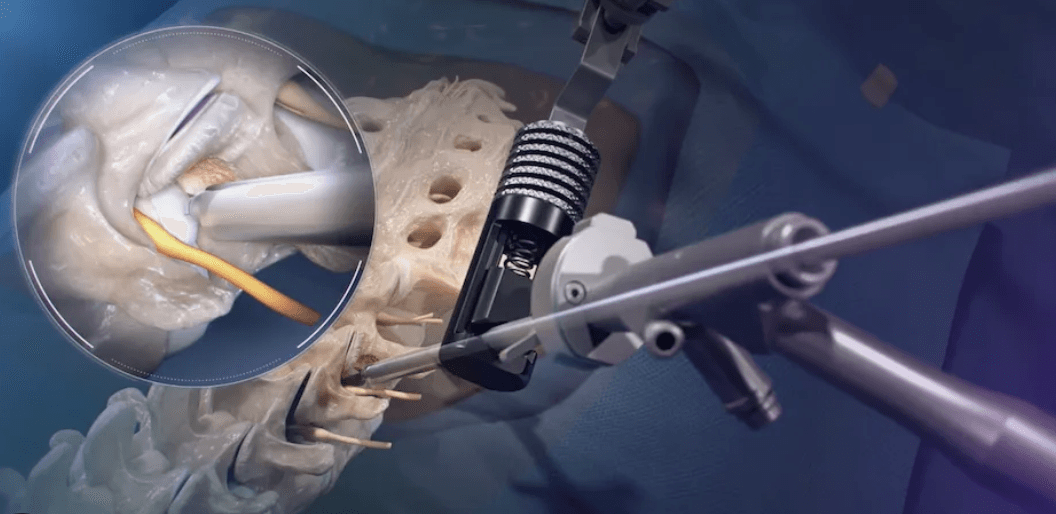
In many cases, discectomy can now be performed as a minimally invasive procedure with robotic assistance, allowing for greater precision, less disruption of surrounding tissue, and a smoother, faster recovery.
When Is Discectomy Recommended?
Your orthopedic surgeon may recommend a discectomy when persistent neck, arm, back, or leg pain, numbness, or weakness have not improved with at least 4 weeks of nonsurgical treatment, such as physical therapy, medications, or injections. Discectomy surgery is most often considered for a herniated disc that compresses spinal nerves and limits your ability to walk, work, or perform daily activities.
To confirm whether discectomy surgery is the right treatment, your surgeon may order diagnostic testing such as an MRI, CT scan, or a myelogram to clearly identify the source of your symptoms.

Discectomy Surgery at a Glance
Discectomy surgery removes disc material that presses on spinal nerves, relieving pain, numbness and weakness in the arms or legs.
- Used to treat: Herniated discs causing sciatica, cervical radiculopathy or other nerve compression symptoms.
- What to expect: Robotic-assisted and minimally invasive approaches, greater precision, shorter hospital stays and often same-day discharge. Surgery involves removing the disc material compressing the nerve.
- Recovery typically includes: A full recovery within 8 weeks. A personalized pain management and outpatient physical therapy plan. You may be a candidate for a discectomy procedure if: You have a herniated disc that compresses the nerves and limits your ability to walk, work or perform daily activities.
Hoag Orthopedic Institute's fellowship trained orthopedic spine surgeons are specially trained in performing discectomy surgery in addition to the most complex and minimally invasive cases

.2510151138550.jpg)