

Osteoporosis
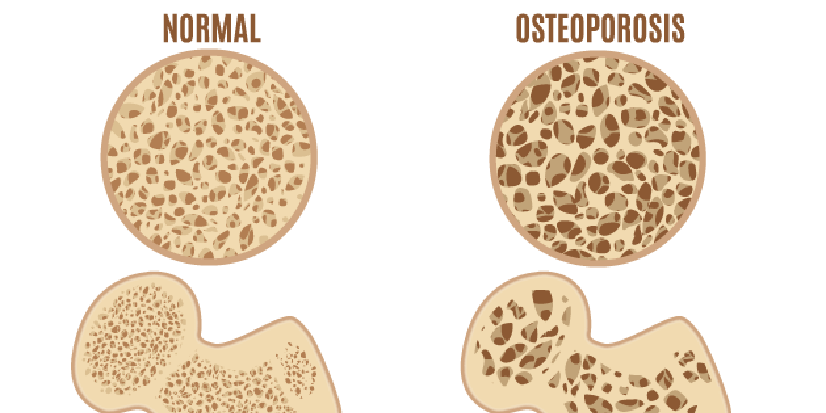
Osteoporosis, meaning “porous bone,” is a progressive disease that puts people at a much higher risk for unexpected broken bones, particularly if they have not yet been diagnosed. Over time, osteoporosis causes loss of bone mass and strength, and most individuals who have it can experience painful fractures of the hips, wrists or spine. When a person has osteoporosis, the creation of new bone is slower than the loss of the broken-down bone.
Osteoporosis Symptoms and Risk Factors
While osteoporosis affects people of all races, postmenopausal white and Asian women are at the highest risk. Other common risk factors include family history, body frame size, too much or too little of certain bodily hormones, dietary factors, long-term use of steroids and others. Osteoporosis is more common in people with medical issues such as IBS, celiac disease, cancer, lupus, myeloma, and rheumatoid arthritis. Certain bad habits can also increase your risk, such as a sedentary lifestyle, excessive alcohol consumption, and tobacco use.
There are typically minimal, if any, symptoms in the early stage of bone loss. More progressed osteoporosis symptoms may include:
- Back pain
- A gradual loss of height
- Stooped posture
- Brittle bones that fracture more easily than expected
Osteoporosis must be taken seriously, as approximately 50% of white women and 25% of white men older than age 50 will sustain bone fractures directly correlated to their osteoporosis. Another one-third of adults with low bone density are at risk of developing osteoporosis, including black men and women. These fractures are usually the result of a fall, but even simple household tasks can result in breaking a bone if the patient is significantly weakened by osteoporosis. Medications, healthy diet and weight-bearing exercise can help prevent bone loss or strengthen already weak bones.

Osteoporosis at a Glance
Osteoporosis is a disease that weakens bones, making them more likely to break from minor falls or everyday activities. It often develops without symptoms until a fracture occurs.
- Osteoporosis symptoms include: Back pain, loss of height, a stooped posture or fractures after minor injuries.
- Causes include: Aging, menopause, family history or long-term use of certain medications.
- Often called a “silent disease,” osteoporosis may not cause symptoms until a bone breaks.
- When to see an orthopedic specialist: If you have a suspected fracture, repeated fractures or symptoms affecting daily activities.
Hoag Orthopedic Institute provides advanced diagnosis and treatment options for patients with osteoporosis. Call (949) 890-0464 to connect today.