

How a Popular Baseball Bat Grip Can Increase the Risk of “Hook of the Hamate” Fractures
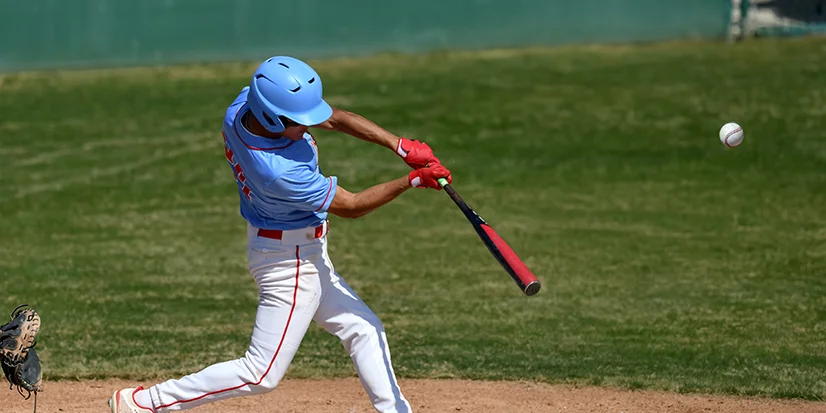
Baseball’s big hitters swing for the fences with every fastball, curve or hanging slider. Because home runs are exciting and win games, “grip it and rip it” is a common cheer from dugouts around the country from all levels of the game. Today, some power baseball players are gripping the bat in a unique way to get more power and bat speed. They grip the bat so that their bottom hand completely wraps around the knob, sometimes with their pinkie off the bat entirely.
This “palmar hamate grip” as it is technically known provides extra bat speed, a key ingredient for hitting more home runs. But this grip has risks, as it places the knob of the bat up against a small pebble-size hand bone in the palm, which has a hook-like structure to its shape. The palmar hamate grip places a 366 percent increase in pressure to the hook of this bone compared to a conventional grip, according to one clinical study.
According to a recent article in the Wall Street Journal, some big-name Major-League Baseball power hitters have experienced this fracture, bringing attention to the risks of the palmar hamate grip.
The hook of the hamate can be fractured by an acute episodic injury (such as a big hit) or due to continuous micro-traumas to the bone over time. Sometimes, it can be hard to diagnose.
In some hamate injuries, once the hook of the bone breaks off, it’s displaced and detaches from the hamate and diagnosing it may take more than a simple x-ray. “Hook of the hamate fractures may take an MRI or CT scan and an experienced orthopedic surgeon to be properly diagnosed,” said Nicolas Rose, M.D., a hand surgeon at Hoag Orthopedic Institute (HOI) who has treated many hamate fractures in both professional and recreational athletes. He has even treated hamate fractures on several recreational hockey players who were teammates.
“In some cases, if the hook is cracked and not broken off, we can treat the injury with a cast,” Dr. Rose said. “But most of the time these fractures require surgery because we don’t want a free-floating tiny bone in the palm,” he said. “Most of my patients with this injury undergo surgery and more than 90 percent are able to return to their sport in about six to eight weeks.”
The hook of the hamate is often injured in “stick sports” like baseball, hockey, tennis and golf. Interestingly, although the majority of the hook of the hamate injuries occur in baseball, “golfers who often forcefully hit the hard ground with their club can experience this fracture as well,” said John M. Ibrahim, M.D., an orthopedic surgeon at HOI who is fellowship trained in hand surgery.
Dr. Rose and Dr. Ibrahim both stressed that prevention of hook of the hamate bone injuries can be successful. “First off, stick to a conventional batting grip and work on proper swing mechanics. The palmar hamate grip just increases your risk of injury by a boatload,” they said.
There are some battling gloves that are designed with extra padding in the area of the hamate, though there are no studies that show gloves, grip tape thickness or any other product diminishes the rate of these injuries.